
Kunliwelding Marine: Can ER5087 Handle Wave Impact Stresses?
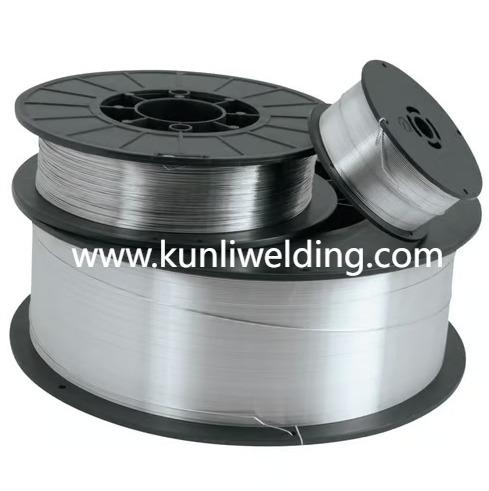
Marine environments impose some of the harshest conditions that welded aluminum structures will ever encounter, combining saltwater corrosion, mechanical stresses from wave action, thermal cycling, and sustained loading throughout decades of continuous service. Shipbuilders, offshore platform fabricators, and marine equipment manufacturers cannot accept marginal materials that merely meet minimum standards, instead requiring filler compositions with proven performance in oceanic exposure. Aluminum Welding Wire ER5087 has established itself as a preferred choice for marine grade applications through a specific combination of properties that directly address the environmental challenges and mechanical demands vessels and offshore structures face throughout their operational lives in some of the planet's most corrosive environments.
Corrosion resistance in saltwater represents the fundamental requirement that governs material selection for marine aluminum structures because chloride rich seawater attacks aluminum through multiple degradation mechanisms. General surface corrosion gradually reduces material thickness over time, while localized pitting creates concentrated damage penetrating deeply into metal. Crevice corrosion accelerates attack in shielded areas where stagnant seawater becomes trapped between adjacent surfaces. The elevated magnesium content in this composition provides enhanced resistance to these marine corrosion modes compared to lower magnesium alternatives, forming protective passive oxide films that slow attack rates and maintain structural integrity throughout extended ocean exposure. This corrosion durability enables decades of service without the catastrophic degradation that inadequately resistant materials would experience.
Strength characteristics adequate for marine structural applications ensure that welded joints can withstand the substantial mechanical loads vessels encounter from cargo weight, wave impacts, propulsion forces, and docking stresses. The solid solution strengthening mechanism through which dissolved magnesium atoms impede dislocation movement creates tensile and yield strength levels suitable for demanding marine service where joints must support design loads reliably without excessive deformation. Hulls, bulkheads, deck structures, and superstructure framing all depend on weld strength matching or exceeding base material capabilities to prevent joints from becoming weak points that compromise overall structural capacity.
Ductility and toughness prevent brittle fracture in applications where sudden overloads, impact events, or stress concentrations could cause catastrophic failures endangering vessels and crews. Marine accidents, collision events, and extreme weather create loading scenarios beyond normal operating conditions, and structural materials must absorb energy through controlled plastic deformation rather than sudden fracture. The moderate ductility this composition provides enables joints to yield and redistribute stress when overloaded, creating predictable progressive deformation that provides warning before complete structural failure occurs. This toughness characteristic proves essential for safety critical marine applications where brittle fracture could sink vessels or collapse offshore platforms.
Fatigue resistance governs service life for structures experiencing millions of stress cycles from wave induced flexing, machinery vibration, and propeller operation throughout years of continuous service. Marine vessels function as dynamic structures constantly moving and flexing rather than remaining stationary, creating fatigue loading that gradually accumulates damage potentially leading to crack initiation and propagation. The microstructure and mechanical properties this filler delivers resist fatigue crack initiation while its ductility slows crack growth rates when flaws do develop, extending safe operating periods between inspections and reducing catastrophic failure risk from undetected fatigue cracks.
Galvanic compatibility with marine grade aluminum base alloys prevents the accelerated corrosion that occurs when dissimilar metals or incompatible aluminum alloys contact each other in seawater presence. Weld zones using compositionally mismatched filler materials can become either anodic or cathodic relative to surrounding base metal, creating galvanic cells that concentrate corrosion along weld seams. The electrochemical potential this composition provides closely matches common marine aluminum alloys, minimizing galvanic current flow and ensuring welds corrode uniformly with base materials rather than becoming preferential attack sites that create structural vulnerabilities.
Weldability under challenging marine fabrication conditions proves essential because shipyard construction and offshore platform assembly often involve field welding, positional welding, and restrained joints that promote defects with sensitive materials. The composition demonstrates reliable crack resistance even in non ideal situations, producing sound welds despite restraints, fit up variations, and environmental factors that construction realities impose. This fabrication forgiveness reduces rejection rates and rework costs while improving confidence that field assembled structures meet quality standards despite challenging construction conditions.
Classification society approvals from organizations governing commercial shipping, offshore oil and gas platforms, and naval vessels validate that this composition meets stringent technical requirements these regulatory bodies impose. Extensive qualification testing and historical performance data support approvals enabling specification across international maritime markets and varied regulatory jurisdictions. These formal approvals simplify material selection and acceptance, providing assurance that chosen materials satisfy applicable standards.
Repair welding capabilities matter significantly for marine vessels and offshore equipment where service damage requires field repairs maintaining structural integrity without drydocking or platform shutdown. The forgiving nature this composition exhibits enables acceptable repair welds under challenging field conditions where environmental control, preheat application, and ideal parameters prove difficult achieving. Maintenance operations benefit from material characteristics supporting quality repairs that restore equipment to service quickly, minimizing expensive downtime.
Long term performance validation through decades of marine service provides confidence that this composition delivers advertised properties throughout extended saltwater exposure. Unlike materials with limited field history where long term performance remains uncertain, this filler benefits from extensive real world experience demonstrating durability, reliability, and safety across varied marine applications and geographic regions from tropical waters to arctic seas.
The convergence of corrosion resistance, mechanical properties, fabrication reliability, and regulatory acceptance explains why this composition remains widely specified for demanding marine aluminum applications where material performance directly impacts vessel safety, structural longevity, and operational economics. Understanding these interconnected property requirements helps engineers select materials that will perform reliably throughout the challenging service lives marine structures endure. Marine grade aluminum welding wire products with comprehensive technical documentation and regulatory approvals are available at https://kunliwelding.psce.pw/8hphzd for shipbuilding, offshore platform fabrication, and marine equipment manufacturing applications. Detailed application guidance and specification support help ensure proper material selection for specific marine service requirements and regulatory compliance needs.

 English
 Arabic
 French
 Spanish
 Deutsch
 Turkish
 Dutch
Dutch
 Italiano
 Russian
 Romaian
 Portuguese (Brazil)
 Greek
Greek