
Deconstructing the Global API Management Market Share
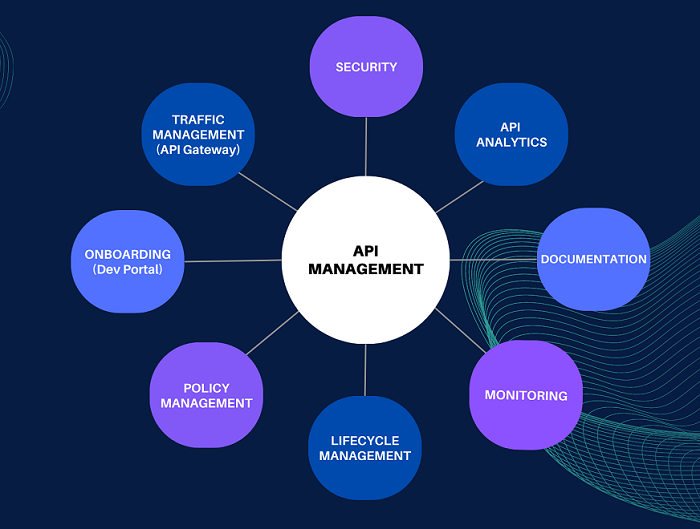
The global market for controlling, securing, and analyzing Application Programming Interfaces is a highly competitive and rapidly evolving space, with market share being a key indicator of leadership in the digital transformation landscape. A detailed analysis of the API Management Market Share reveals that the competitive environment is primarily a battle between two major types of players: the large, hyperscale cloud providers who offer API management as an integrated part of their broader platform, and a cohort of specialized, "pure-play" API management vendors who offer more advanced, cross-cloud functionality. While a few key leaders have emerged, the market is far from a monopoly, with different vendors holding strengths in different segments, such as on-premises deployments, hybrid cloud management, or specific industry verticals. Market share is typically measured by revenue, the volume of API traffic managed, and, importantly, by recognition in key industry analyst reports from firms like Gartner and Forrester, which heavily influence enterprise buying decisions. The ongoing struggle for dominance is shaping the future of how businesses connect and innovate in the API economy.
A substantial and rapidly growing portion of the market share is held by the major public cloud providers: Google (with its Apigee platform), Amazon Web Services (with Amazon API Gateway), and Microsoft (with Azure API Management). Google's acquisition of Apigee, a long-standing market leader, instantly made it a dominant force in the space. The core strategy of these hyperscalers is to offer a deeply integrated, "good-enough" API management solution that is incredibly easy to adopt for customers already using their cloud services. Their platforms are tightly woven into their broader ecosystems of compute, database, and AI services. For a company that is "all-in" on AWS, using the native Amazon API Gateway is often the simplest and most cost-effective choice. The immense scale, global reach, and vast customer bases of these cloud giants give them a powerful advantage in capturing market share, particularly among cloud-native companies and those in the process of migrating their infrastructure to the cloud. They are effectively leveraging their dominance in IaaS to capture the adjacent API management market.
While the cloud giants are a formidable force, a significant share of the market, particularly in large, complex, hybrid, and multi-cloud enterprises, is held by a group of specialized, best-of-breed API management vendors. Companies like MuleSoft (acquired by Salesforce), Kong, and Axway are leaders in this category. Their primary differentiator is their ability to provide a single, unified platform that can manage APIs across any environment—on-premises data centers, private clouds, and multiple public clouds. This neutrality and cross-cloud capability is a major selling point for large enterprises that want to avoid being locked into a single cloud provider's ecosystem. These vendors often offer more advanced and flexible features for complex integration scenarios, enterprise-grade security, and sophisticated governance. MuleSoft, for example, positions itself as a broader "integration platform" (iPaaS) that includes powerful data transformation and orchestration capabilities alongside its API management. Kong has gained significant traction with its open-source, high-performance gateway, which is popular among developers and for microservices architectures. These specialists compete on the depth and breadth of their features and their ability to solve complex, heterogeneous integration challenges.
The competitive landscape is further populated by a number of other important players who hold share in specific segments. This includes traditional enterprise software and middleware companies like IBM, Red Hat, and Broadcom, who have long-standing relationships with large enterprise customers and offer API management as part of their broader integration and application infrastructure portfolios. There is also a vibrant ecosystem of open-source API gateway projects, such as Kong and Tyk, which have gained significant adoption, particularly among tech-savvy companies and for use in modern, cloud-native architectures. These open-source options offer flexibility and lower cost, with vendors typically generating revenue by providing enterprise-grade support, management tools, and additional features on top of the open-source core. This diverse ecosystem, from hyperscalers to pure-play specialists to open-source projects, ensures a healthy level of competition and innovation, providing customers with a wide range of options to fit their specific technical requirements and business strategies.
Explore More Like This in Our Regional Reports:
South America Business Process Outsourcing (BPO) Services Market

 English
 Arabic
 French
 Spanish
 Deutsch
 Turkish
 Dutch
Dutch
 Italiano
 Russian
 Romaian
 Portuguese (Brazil)
 Greek
Greek