
Comparing Polyester Mesh and Woven PVC Tarpaulin
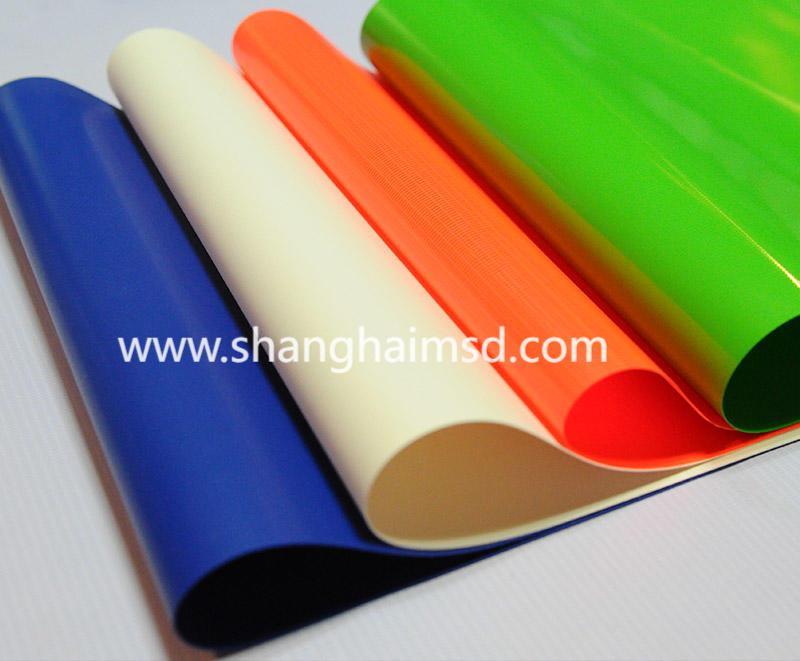
Across industrial and commercial sectors, PVC Tarpaulin Fabric has earned its reputation as a durable, weatherproof, and flexible material. It owes this reliability to a combination of polymer science and textile engineering, where every layer is carefully constructed to perform under demanding environmental conditions. Unlike simple fabrics, PVC-coated materials represent a sophisticated union of structure and chemistry designed for endurance and adaptability.
At its core, the tarpaulin begins as a reinforcement textile — most commonly high-strength polyester yarns woven or knitted into a mesh grid. This mesh serves as the skeleton of the entire fabric, dictating its tensile strength and dimensional stability. The denser the weave, the higher the load-bearing capacity, making it suitable for industrial covers, truck awnings, and outdoor shelters. Shanghai MSD International Trading Co., Ltd. utilizes advanced weaving technology to create consistent base fabrics with precise tension control, minimizing defects and enhancing coating adhesion.
Once the polyester base is ready, it enters the coating stage. A liquid blend of PVC resin, plasticizers, stabilizers, and pigments is prepared according to the specific performance target — flexibility, UV resistance, or color fastness. The coating process typically uses knife-over-roll or calendering techniques to evenly spread the resin onto both sides of the fabric. The coated layers are then fused using controlled heat and pressure, allowing the PVC to penetrate deeply into the woven fibers. This fusion creates a single integrated structure that combines flexibility with extreme tear resistance.
There are two dominant variations of PVC tarpaulin: polyester mesh-based and woven PVC-coated cloth. Mesh versions offer breathability and lighter weight, making them ideal for shade structures, inflatable tents, or temporary event canopies. Woven PVC tarpaulins, in contrast, have tighter fiber patterns and thicker coatings, which increase strength and impermeability — essential for heavy-duty applications such as industrial containment, storage tents, or transport vehicles. Shanghai MSD provides both, adjusting coating thickness and texture based on environmental demands.
Surface treatment plays a vital role in enhancing functionality. Anti-fungal and anti-static coatings prevent biological buildup and dust accumulation, while UV stabilizers protect against sunlight degradation. Some products even include self-cleaning finishes that repel dirt and reduce maintenance. These post-production modifications ensure that the fabric retains its physical and visual qualities even after prolonged outdoor exposure.
Mechanical performance, however, is only part of the story. PVC tarpaulins also stand out for their versatility in design and application. The material can be customized in color, gloss level, or surface texture — from matte industrial tones to polished finishes for commercial branding. With precision printing technologies, Shanghai MSD produces tarpaulins that double as promotional displays while maintaining the same durability as standard variants.
In addition to customization, sustainability has become a central focus in modern tarpaulin manufacturing. Traditionally, PVC production raised environmental concerns due to the use of plasticizers and solvents. However, contemporary processes have evolved significantly. Many producers now rely on phthalate-free formulations, solvent-free coating techniques, and closed-loop recycling systems to reduce emissions. Shanghai MSD is among the companies leading this shift by integrating green chemistry and waste recovery into its manufacturing lines.
The performance balance between polyester and PVC layers is the essence of why these fabrics endure extreme conditions. The polymer coating seals the fibers, preventing water penetration and resisting tearing, while the textile core absorbs tension and maintains shape. This synergy between flexibility and toughness ensures reliability in transportation, construction, and emergency shelter applications.
PVC tarpaulin’s manufacturing complexity is a testament to how far material engineering has progressed. It exemplifies how scientific precision can transform basic polymers into high-performance fabrics that combine function, aesthetics, and sustainability. To explore more about how Shanghai MSD refines this balance of design and durability, visit https://www.shanghaimsd.com/news/what-is-pvc-tarpaulin-fabric.html .

 English
 Arabic
 French
 Spanish
 Portuguese
 Deutsch
 Turkish
 Dutch
Dutch
 Italiano
 Russian
 Romaian
 Greek
Greek