
Powering the Future: India’s Green Hydrogen Revolution
Introduction
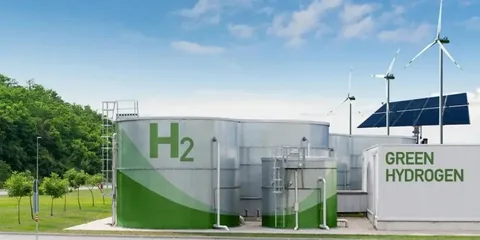
The India Green Hydrogen Market is emerging as a cornerstone of the nation’s clean energy transition. With a growing commitment to reducing carbon emissions and achieving net-zero targets by 2070, India is positioning itself as a global hub for green hydrogen production. Green hydrogen, produced using renewable energy sources such as solar and wind through electrolysis, offers a sustainable alternative to fossil fuels for hard-to-abate sectors like steel, fertilizers, and transportation. The government’s National Green Hydrogen Mission (NGHM) and increasing private sector participation are catalyzing rapid market development.
Market Drivers
One of the primary drivers of this market is India’s ambitious decarbonization agenda. The government aims to produce 5 million metric tonnes (MMT) of green hydrogen annually by 2030, reducing dependence on imported fossil fuels and enhancing energy security. Abundant renewable energy resources—particularly solar and wind—make India ideal for large-scale hydrogen production. Falling renewable energy costs and declining electrolyzer prices further strengthen the market’s economic feasibility. In addition, collaborations between public and private entities, such as NTPC, Reliance Industries, and Adani, are propelling infrastructure and technological advancements in the hydrogen value chain.
Market Challenges
Despite promising prospects, the market faces several technological, financial, and infrastructural challenges. The high initial capital cost of electrolyzers and hydrogen storage systems remains a key barrier. Limited availability of hydrogen refueling and transport infrastructure hampers widespread adoption. Moreover, the need for policy clarity regarding certification, subsidies, and carbon pricing mechanisms slows project execution. Ensuring the scalability and long-term stability of renewable energy sources to power hydrogen production also presents logistical hurdles.
Opportunities
Significant opportunities exist in green ammonia production, industrial decarbonization, and export potential. India’s strategic location and low renewable energy costs position it as a future exporter of green hydrogen and derivatives to regions like Europe, Japan, and South Korea. Domestic industries—especially steel, cement, and fertilizers—can leverage green hydrogen to meet carbon reduction mandates. The establishment of hydrogen hubs and specialized industrial clusters under government initiatives will encourage private investment. Moreover, technological partnerships with global players for electrolyzer manufacturing and hydrogen storage can accelerate domestic capacity building.
Regional Insights
States such as Gujarat, Rajasthan, and Tamil Nadu are at the forefront of green hydrogen projects due to their vast renewable energy potential and supportive policies. Coastal regions are likely to play a key role in developing export-oriented hydrogen infrastructure, including ports and pipelines. Northern India is also expected to emerge as a significant demand center, driven by industrial usage in refineries and fertilizer plants. The government’s initiative to develop hydrogen valleys—integrated ecosystems of production, storage, and consumption—is enhancing regional diversification.
Future Outlook
The future of the India Green Hydrogen Market is bright, with the country moving toward becoming a global green hydrogen leader. The focus will shift from pilot projects to commercial-scale production and exports by the end of this decade. Continuous cost reductions in electrolyzers, coupled with large-scale renewable deployment, will make hydrogen competitive with fossil fuels. The development of hydrogen storage technologies and carbon credit mechanisms will further strengthen the market. By 2035, India is expected to emerge as a key exporter of green hydrogen and ammonia, supporting global decarbonization efforts.
Conclusion
The India Green Hydrogen Market symbolizes the country’s strategic shift toward sustainable industrialization and clean energy leadership. Backed by robust policy support, strong private sector involvement, and vast renewable potential, India is poised to revolutionize its energy ecosystem. Green hydrogen will not only drive industrial decarbonization but also contribute to job creation, energy independence, and export growth. With continued innovation and policy refinement, India’s green hydrogen future looks both promising and transformative.

 English
 Arabic
 French
 Spanish
 Portuguese
 Deutsch
 Turkish
 Dutch
Dutch
 Italiano
 Russian
 Portuguese (Brazil)
 Greek
Greek