
Reducing Assembly Errors with Wire-to-Board Connectors
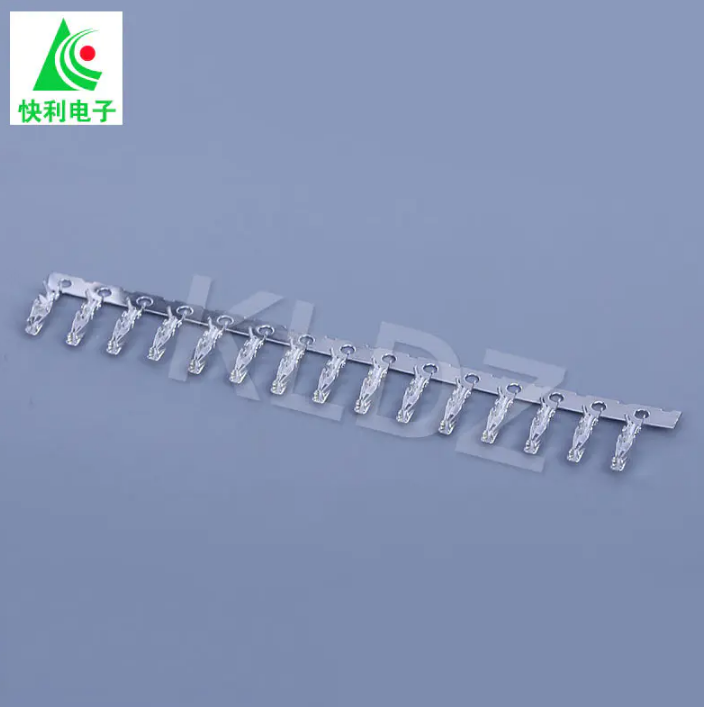
In electronics manufacturing, assembly efficiency directly impacts production cost and product quality. Wire To Board Connectors are designed to streamline the process of connecting discrete wires to PCBs, reducing the need for manual soldering. By combining these connectors with Wire To Board Crimp Style Connectors, manufacturers can achieve a reliable and repeatable connection.
Crimping the wire to a terminal before inserting it into the PCB housing ensures a secure electrical path. For instance, a crimped 26 AWG wire can handle currents up to 2A with a typical insulation rating of 105°C. This reduces the risk of intermittent connections, which is especially important in devices exposed to vibration or thermal cycling.
Automated assembly lines benefit significantly from pre-crimped terminals, as they can be fed into connector housings using insertion machines. This not only speeds up production but also reduces human error. Furthermore, wire-to-board connectors are available in multiple pitches and pin counts, ranging from 2-pin 2.0 mm connectors to 40-pin 5.08 mm dual-row connectors, offering flexibility for various design requirements.
These connectors also contribute to maintenance efficiency. Devices with modular wire-to-board connections can be disassembled and reassembled without soldering, saving time during repairs or upgrades. Considering these factors, wire-to-board and crimp style connectors play a critical role in efficient and reliable electronics assembly.

 English
 Arabic
 French
 Portuguese
 Deutsch
 Turkish
 Dutch
Dutch
 Italiano
 Russian
 Romaian
 Portuguese (Brazil)
 Greek
Greek